Portulacaria Afra Care: Tips on Growing & Nurturing The Elephant Bush Cactus
Succulents tend to acquit listen-blowing attributes that nigh homeowners find piece of cake to handle. The Elephant Bush-league, or otherwise known by its scientific name, Portulacaria afra , is ane elevated shrub from the Didiereaceae family that you'll for certain enjoy owning and caring for. Let'southward have an upwardly-shut expect at some of the handy tips to work with while growing and nurturing the Elephant Bush cactus.
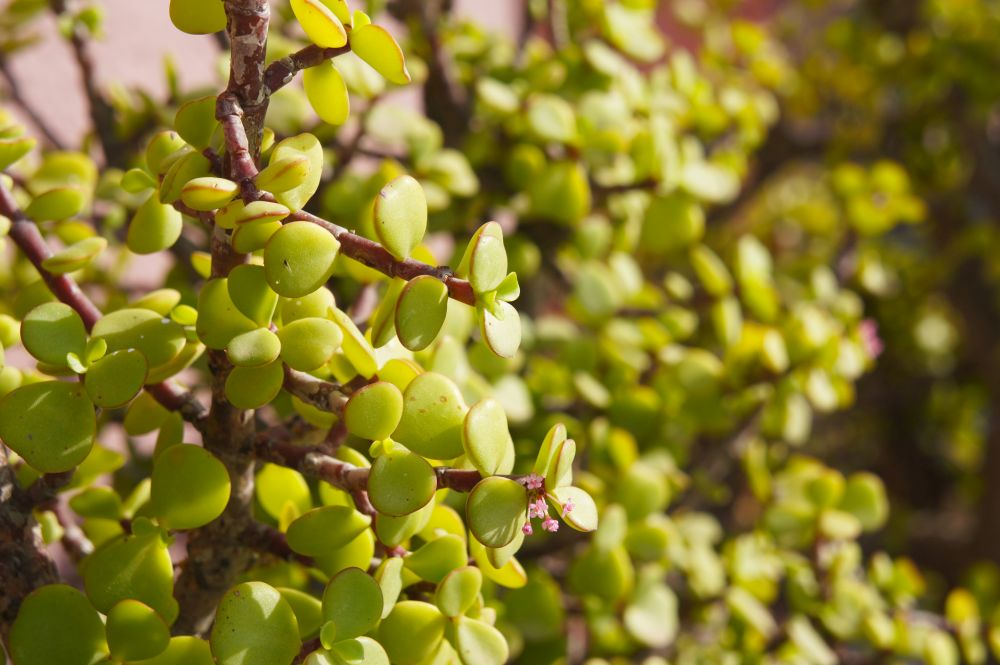
The Elephant Bush Cactus at a Glance
While tracing this delicious back to its roots, we learned that it'south natively from the eastern region of South Africa, where it's fond of semi-barren and rocky slopes. To be exact, the Elephant Bush Cactus is majorly from 2 regions— the northern side of the Eastern Cape, together with Limpopo Province.
And so, if you're looking to abound this cultivar in your home, the cardinal focus should ideally be digging a lilliputian deeper to notice more than about the growing and caring requirements which information technology's accustomed to. If you walk into your nearest nursery or gardening store, you might besides discover the Elephant Bush labeled as:
- Porkbush
- Spekboom
- Dwarf Jade Establish
- Rainbow Elephant Bush
Most types you'll notice in gardening stores are petite and variegated. The variegated type —Portulacaria afra 'Variegata'— which you'll highly likely come up across in most nurseries is known every bit the Rainbow Bush-league. Information technology does strikingly well nether arid and rocky slopes, alongside other plants.
It's a hardy constitute with the potential to grow nether USDA hardiness zones 9 through 11. What y'all might admire the most nearly this delicious are its crimson-brown stems that sprout up and take an in-depth chapters to reach between 8" to 15" feet alpine, on average. Just considering its deadening-growing nature, high chances are it would only grow a few feet tall.
Elephant Bush-league Found Caring Tips
Flowering & Fragrance
The elephant bush is mostly identified by its reddish-chocolate-brown stems that hold dense dark-green leaves that gleam throughout the seasons so long every bit yous're giving it the right growing requirements. It's, however, hard for this delicious to bloom even during a growing flavour.
But if you have care of it optimally, the Elephant Bush-league can yield a few flowers in clusters that grow in dissimilar shades of white, purple, or pink. The flowers are usually star-shaped and can develop one time the constitute is significantly old, specially afterward a rainy flavor. Keep your plant dry to protect the young blooms from decomposable.
Light & Temperature
Same as nearly other succulents, the elephant bush thrives under a warm surround and needs bright filtered light. It'south platonic for growing it near a window with curtain sheers or under a partial shade. Exposing this houseplant to the full sun will cause the leaves to get scorched.
Y'all can move it outdoors where the lord's day is at full length, but extending the number of hours information technology stays out should be gradual until information technology's fully accustomed to the sunrays. It's worth noting that fifty-fifty if your elephant bush tin can mutate to the full sun, any intense oestrus could damage its vigor.
If you're living in areas such as California, where temperatures can rising beyond 37 °C, a shade would come in handy to protect your elephant bush from sunburns. This delicious also can't tolerate frosting conditions, so you'll need to movement the medium inside during winter.
While it can withstand temperatures under 25 degrees Fahrenheit, your elephant bush wouldn't remain in good concrete condition for too long. So, if you're looking to grow it outdoors, using a container would be quite useful since it takes less try to motility your stunning Elephant delicious indoors.
Soil & Transplanting
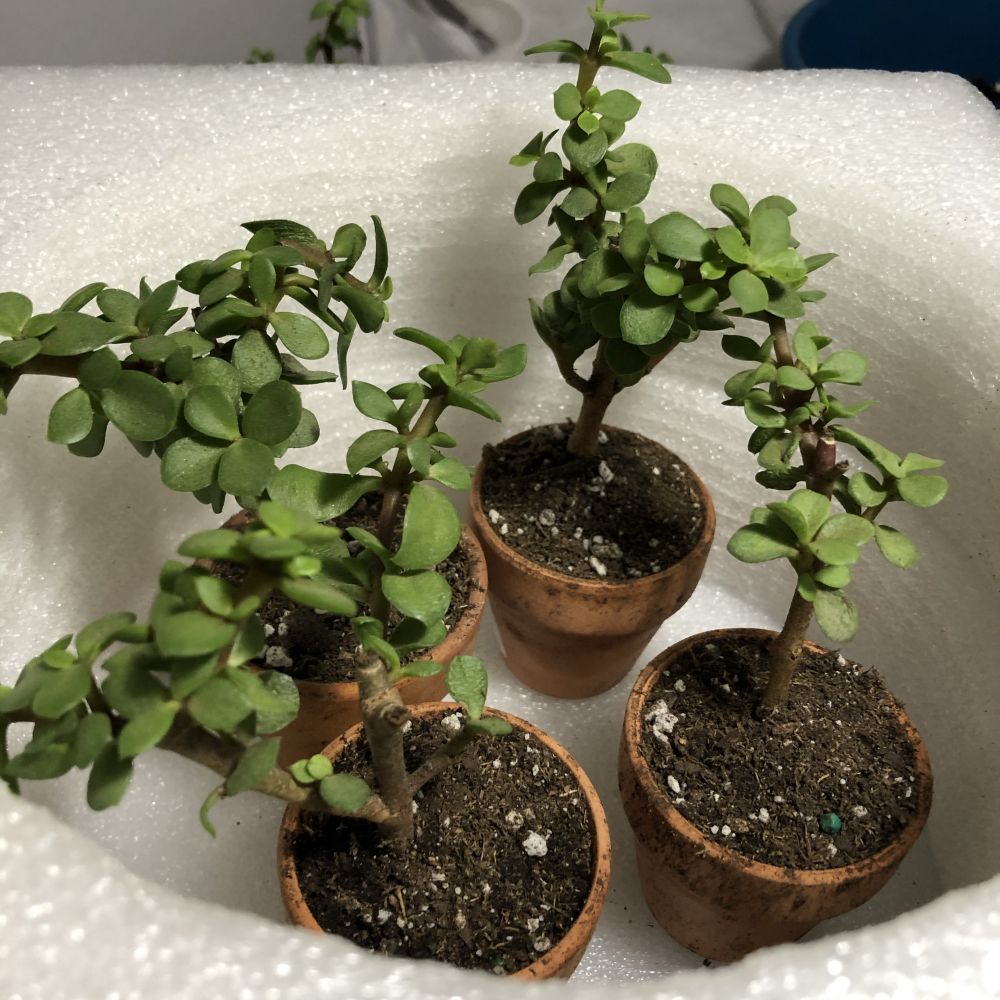
The trailing elephant bush-league doesn't accept any concrete soil requirements. What matters the most while preparing the potting mix is using well-draining soil and a container with enough holes to permit out any excess h2o. All cacti plants store wet in their stems and trunks, which they feed on during a drought period.
Therefore, y'all need to consider the aeration needs past purchasing cactus potting soil, which is sold in most nurseries and gardening stores. Such a growing mix of cactus plants prevents excess moisture from causing impairment to the roots and stems.
And while it'southward cheaper to make your ain soil construction, you need to take a fine print of all the right materials used to make a rich potting mix. Dead fibrous materials such as peat moss, for instance, decompose mode quicker, residual the soil's pH, hold excess moisture, and release it when needed. Peat moss should make at least one-3rd of the whole composition of the mix.
Mixing perlite with sand too helps advance the drainage rate. E'er be careful not to go out the soil excessively moist since that would cause the cell walls to rupture. Before transplanting, prepare a new potting mix and so the plant can get a revitalized supply of nutrients.
Watering & Feeding
The elephant bush houseplant is strikingly drought tolerant, then you don't demand to proceed the soil moist day-to-day for it to survive. It can exercise well with a normal watering schedule. Same as most other succulent houseplants, information technology prefers to exist watered more often during summer when the temperatures are warmer, while the intervals need to be spaced out a piffling further when it's winter.
To put information technology only, that's to suggest that your elephant bush-league plant's watering needs will highly cling to the climatic weather condition of the region where you alive in. When the heatwave is intense during summer, I h2o my Elephant Bush every 7-ix days.
But when the temperatures are freezing, I tend to lessen the watering routine to about twice or thrice a month. If you're growing it outdoors, you can depend on rainwater and cut back on the normal watering intervals. You lot need to accept note that overwatering could ruin your plant's aura and make the roots rot.
To continue this from happening, make sure to check whether the beginning few inches of the topsoil have dried out completely before watering your Trailing Elephant Bush-league adjacent. Ane of the best seasons to fertilize this delicious is during spring, when the daytime temperatures are at least anywhere higher up 15°C.
Apart from a well-balanced fertilizer (xv-fifteen-15), you tin opt to utilize organic material such as manure tea, soluble fish emulsion, and coconut coir. Don't miss to use soluble fertilizer to protect the roots from getting burned. Water your Elephant Bush-league plant earlier fertilizing it.
Pour the diluted liquid fertilizer into the soil till it drains through the holes under the pot. It doesn't matter which brand y'all want to utilize— y'all simply need to make sure that the nitrogen, phosphorus, and potassium composition is in equal ratio. For succulents such every bit the Elephant Bush-league, using half the dose on the packet to feed it will suffice.
How to Propagate the Elephant Bush-league Institute
You can propagate this hardy succulent quite easily using stalk cuttings. Stem cuttings tend to be a faster route compared to seeds which have longer to develop into a mature plant, especially if they're aged or not stored properly. To get started with the propagation exercise, you but need to follow these simple steps:
- Apply a sharp pocketknife or pair of pair of scissors to dissect a few healthy stems correct at the base of operations of the mother plant.
- Yous can also choose to use the offsets which autumn off from the female parent found and abound on the edges of the container.
- Make sure to sterilize the scissors, so yous don't infect your newly propagated cuttings with worrisome diseases.
- Get out the cuttings out to give the wounds some fourth dimension to heal and form a callus.
- Dip the base role of the cuttings in rooting hormone to encourage the growth of roots.
- Prepare a well-draining cactus mix where y'all'll plant the cuttings. Follow through the soil and transplanting tips we just shared in this guide.
- Within 4-6 weeks, the roots should begin to form then long as the cuttings take access to bright filtered calorie-free and the soil is gently moist.
Common Pests & Diseases
It's typical for this houseplant to attract mealybugs and spider mites. Whiteflies, too, beloved to feed on the sap from succulents. A quick remedy for such kind of infestation would exist wiping off the affected areas using cotton swabs dipped in an alcoholic solution.
Pests such as root aphids or calibration insects, on the other mitt, might be hard to spot with bare eyes, then watching out for early on signs and could be such a rapid mitigating remedy. You might as well see some common signs of overwatering, such as the yellowing of the leaves. If you underwater it, your cactus will experience mushy, and the leaves might begin to droop.
Spare some time to check the soil's moisture levels to know when next your Elephant Bush will need to be watered. And even though this succulent is much known for its whimsy drought tolerance, it's quite off-base to neglect your establish's watering needs for longer periods.
Benefits & Uses of the Elephant Bush-league
In that location'southward quite a handful of benefits that fix the Elephant Bush-league strides apart from other succulents yous'd find in nearly nurseries and gardening stores. It looks k and admirable while sitting on a shaded patio or inside a hanging handbasket. You can as well opt to use it every bit a landscaping miniature plant outdoors in your garden.
Just quite oft, nigh homeowners adopt the abaft elephant bush-league as a houseplant for its fantabulous decorative artful and aptitude to grow wildly on a south or w-facing window. Apart from elephants, goats and tortoises also detect this delicious edible. Natives from South Africa also utilize it to brand stew and salads.
mccownhappriberan.blogspot.com
Source: https://www.diys.com/portulacaria-afra/

Post a Comment for "Portulacaria Afra Care: Tips on Growing & Nurturing The Elephant Bush Cactus"